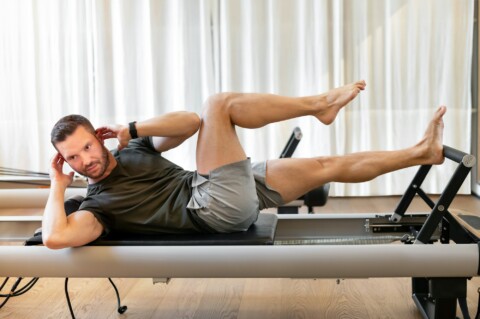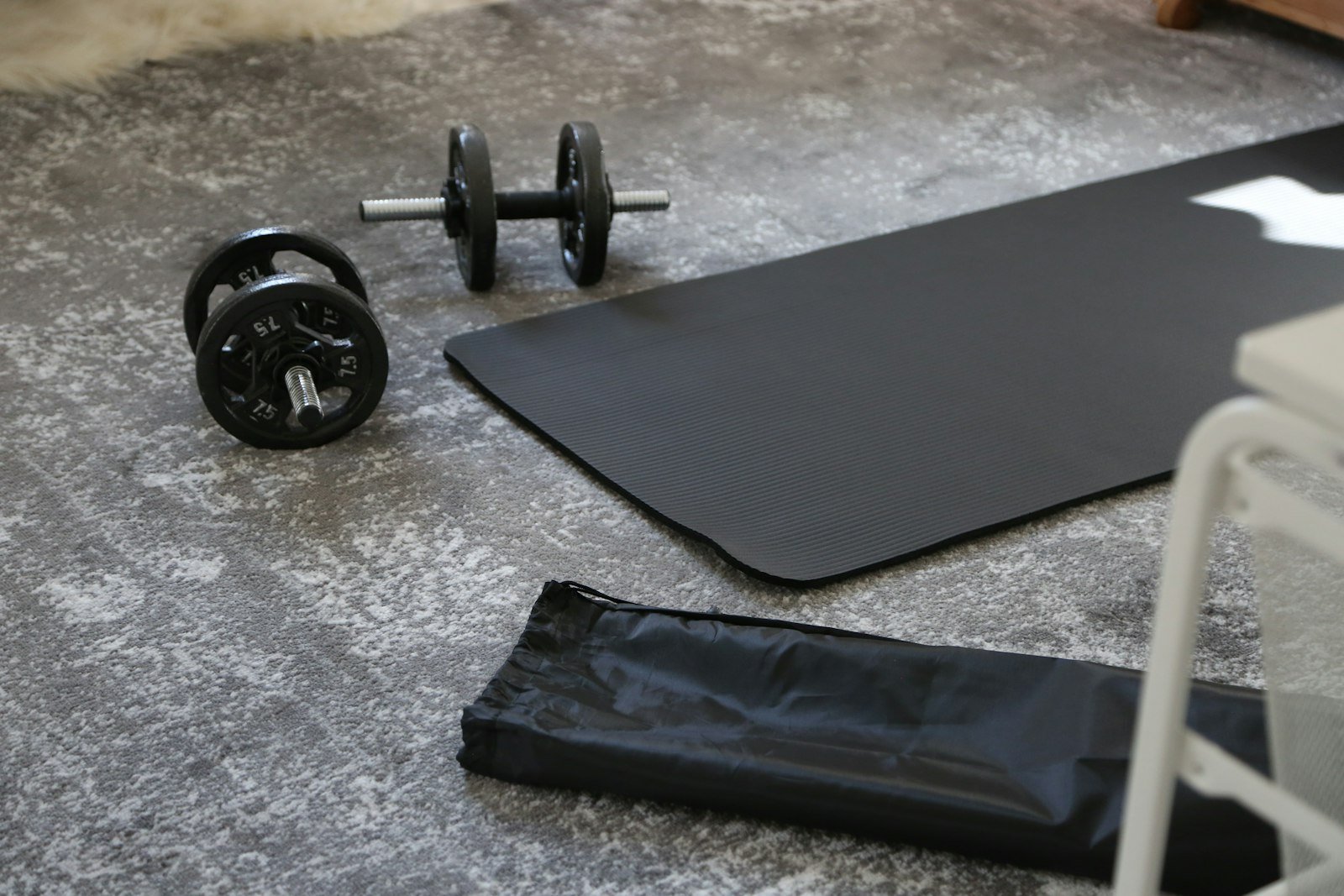
You do not need a gym membership, a rack of weights, or even a lot of floor space. Your body weight and about 25 minutes, three times a week, are enough to get stronger.
Why Bodyweight Training Works
Muscles respond to challenge, and your own weight provides plenty of it when you are starting out. Squats, push-ups, and planks train the same movement patterns used in daily life: sitting down and standing up, pushing, pulling, and holding your trunk steady. Bodyweight training also builds balance, coordination, and joint stability, and it costs nothing.
The only requirement is that the work feels challenging by the last few reps. When it stops feeling that way, you adjust the exercise, not the equipment.
Start With a Short Warm-Up
Spend five minutes preparing your body. It lowers the chance of injury and makes the first set feel smoother.
- March in place or walk around the room for one minute.
- Do 10 arm circles in each direction.
- Do 10 slow hip circles and 10 gentle trunk rotations.
- Do 8 bodyweight squats with a shallow range.
- Do 8 cat-cow movements on hands and knees to loosen the spine.
The Six Core Movements
These six cover the whole body. Each has an easier and a harder version so you can match your level.
1. Squat. Stand with feet shoulder-width apart, sit your hips back and down as if to a chair, keep your chest up, and stand again. Easier: squat to a real chair and lightly touch it. Harder: slow the descent to three seconds.
2. Incline push-up. Place your hands on a sturdy counter or table, keep your body in a straight line, and lower your chest toward the edge. Easier: use a higher surface, such as a wall. Harder: lower the surface to a sofa seat, then the floor.
3. Glute bridge. Lie on your back with knees bent, feet flat, and lift your hips until your body forms a line from shoulders to knees. Squeeze at the top. Harder: lift one leg at a time.
4. Reverse lunge. Step one foot back, lower until the front thigh is near parallel, and push back up. Easier: hold a chair for balance. Harder: add a pause at the bottom.
5. Bird dog. On hands and knees, reach one arm forward and the opposite leg back, hold briefly, and return. Keep the hips level. It trains the core and lower back gently.
6. Plank. Rest on forearms and toes, or knees if needed, keeping a straight line from head to hips. Easier: plank with your hands on a counter. Harder: extend the hold time.
A Simple Weekly Plan
Start with three full-body sessions on non-consecutive days, such as Monday, Wednesday, and Friday.
- Week 1 and 2: Do each of the six moves for 8 to 10 reps (or a 20-second plank), resting 30 to 45 seconds between moves. Complete 2 rounds.
- Week 3 and 4: Increase to 10 to 12 reps and 3 rounds, or hold the plank for 30 seconds.
- Week 5 onward: Move to a harder version of one or two exercises, or slow your tempo.
On the days in between, go for a walk, stretch, or simply rest. Recovery is when the improvements happen.
How to Progress Without Equipment
If the exercises feel easy, there are several ways to make them harder.
- Slow the tempo. Take three seconds to lower and one to rise. This increases the work without adding reps.
- Add pauses. Hold the bottom of a squat or lunge for two seconds.
- Move to one side. Single-leg bridges and step-downs are much harder than their two-leg versions.
- Add household weight. A backpack with books, or a filled water bottle in each hand, works well for squats and lunges.
- Reduce rest. Shortening breaks between exercises raises the pace.
Common Mistakes to Avoid
Rushing reps is the biggest one. Fast, sloppy movement uses momentum instead of muscle and increases injury risk. Another is holding your breath: exhale on the effort, inhale on the easier part. Many beginners also skip the warm-up or train too hard too soon, then quit after a week of soreness. Start where you are, even if that feels too easy. A plan you can repeat for months beats a heroic week.
Joint pain is not the same as muscle fatigue. A burning, tired feeling in the muscle is normal. Sharp pain in a knee, shoulder, or back is a signal to stop and adjust the move.
Cool Down and Stretch
Finish with three to five minutes of gentle stretching. Try a standing quad stretch, a hamstring stretch with one heel on a low step, a doorway chest stretch, and a child’s pose to relax the back. Breathe slowly and let your heart rate settle.
Making It a Habit
Choose a regular time, lay out your space the night before, and keep the session short enough that skipping feels silly. Track your workouts on paper or on your phone, because seeing a streak builds motivation. If a day goes wrong, do a five-minute version rather than nothing. Consistency matters more than perfection.
Frequently Asked Questions
Can I build muscle without weights?
Yes, especially as a beginner. Muscles grow when challenged close to their limit, and bodyweight work can do that when you progress the exercises over time.
How long before I see results?
Most people notice better energy and easier movement within a few weeks. Visible changes usually take longer and depend on sleep, nutrition, and consistency.
Do I need to work out every day?
No. Three sessions a week is a strong start. Rest days let muscles recover and make you less likely to burn out.
What if I have knee or back problems?
Use smaller ranges, supported versions such as chair squats, and skip any move that causes pain. A physiotherapist can suggest safe alternatives for your situation.
The Takeaway
Six movements, three days a week, and a willingness to repeat. That is a complete beginner program, and you can run it in a spare corner of your home. Begin gently, progress slowly, and let the habit do the heavy lifting.
This article is general information, not medical advice. If you have a medical condition, an injury, or have been inactive for a long time, speak with a doctor before starting a new exercise program.