Few things lift a simple meal like a handful of fresh herbs picked moments before cooking. The surprise is how little space you need. A sunny windowsill, a balcony railing, or a few pots by the door can supply mint for tea, parsley and coriander for the pot, and thyme or rosemary for roasting. Here is how to build a small herb garden that thrives.
Why Grow Herbs at Home
- Freshness and flavor. Herbs lose aroma quickly after picking, so homegrown ones taste noticeably better than wilted bunches.
- Savings. A pot costs little, and a single plant can supply cuttings for months.
- Convenience. No more buying a large bunch when a recipe needs a few sprigs.
- Greenery and fragrance. Herbs make balconies and kitchens feel alive and smell wonderful.
- Beginner friendly. Many herbs are forgiving, quick to grow, and rewarding within weeks.
Step 1: Check Your Light
Light is the most important factor. Most culinary herbs, especially basil, rosemary, thyme, and oregano, need at least four to six hours of direct sun each day. Observe your space at different times of day to see how much sun it gets.
- South- or west-facing windows and balconies (in the northern hemisphere) usually give the strongest light.
- Partial shade spots suit mint, parsley, chives, and coriander, which can bolt (flower and turn bitter) in intense heat.
- In very hot climates, afternoon sun can scorch leaves. Provide light shade during the hottest hours, such as a sheer curtain, a shade cloth, or placing pots behind taller plants.
If natural light is poor, a small LED grow light placed 20 to 30 cm above the plants for about 12 hours a day can work well.
Step 2: Choose the Right Herbs
Start with herbs you use often. A good beginner mix includes:
- Mint: grows fast and loves moisture, but spreads aggressively, so always keep it in its own pot.
- Parsley: flat-leaf and curly types both do well in medium light and regular watering.
- Coriander (cilantro): prefers cooler temperatures, and benefits from regular sowing every few weeks.
- Basil: loves warmth and sun, and needs regular pinching to stay bushy.
- Thyme, oregano, and rosemary: Mediterranean herbs that like sun and prefer drier soil.
- Chives: hardy and easy, and a good choice for smaller pots.
Group herbs by their needs. Moisture-loving herbs like mint, parsley, and coriander can share one planter, while sun-loving Mediterranean herbs such as thyme, rosemary, and oregano thrive together in drier conditions.
Step 3: Pick Containers With Drainage
Almost any container will work as long as it has drainage holes. Standing water around the roots is the number one cause of dying herbs.
- Terracotta pots breathe and dry out evenly, which suits thyme, rosemary, and oregano, though they need more frequent watering in heat.
- Plastic or glazed pots hold moisture longer, a good fit for mint, parsley, and basil.
- Rectangular planters and railing boxes save space and let you grow several herbs in a row.
- Recycled containers such as tin cans, wooden crates, or buckets can be turned into planters. Drill or punch drainage holes in the bottom.
Choose pots at least 15 to 20 cm wide and deep for most herbs. Rosemary and larger plants need more room, around 25 to 30 cm. Put a saucer or tray beneath each pot, and empty it after watering.
Step 4: Use Good Soil
Use a light, well-draining potting mix instead of heavy garden soil, which compacts in containers. For Mediterranean herbs, mix in a handful of coarse sand or perlite to improve drainage. For mint and parsley, a mix rich in compost helps retain moisture. Fill the pot to about 2 cm below the rim to leave room for watering.
Step 5: Plant From Seeds or Seedlings
Seedlings from a nursery give a head start and are best for slower herbs such as rosemary, thyme, and oregano. Seeds are inexpensive and work well for parsley, coriander, basil, and chives.
- Moisten the soil before planting.
- Sow small seeds on the surface and cover lightly, following the packet instructions.
- When transplanting seedlings, gently loosen the roots, set the plant at the same depth as before, and firm the soil around it.
- Water gently after planting and place in the appropriate light.
You can also grow new plants from cuttings. Mint, basil, and rosemary will root in a glass of water or in moist soil within a couple of weeks.
Step 6: Water Wisely
Overwatering is more common than underwatering. Push a finger about 2 cm into the soil. If it feels dry, water thoroughly until water drains from the bottom. If it is still damp, wait.
- Thirsty herbs: mint, parsley, basil, and coriander like consistently moist, not soggy, soil.
- Drought-tolerant herbs: thyme, rosemary, and oregano prefer to dry out between waterings.
- Water in the morning or evening in hot weather to reduce evaporation.
- In summer, pots on balconies may need watering daily, so check often.
Step 7: Feed Lightly
Herbs do not need heavy fertilizer, which can dilute flavor. A diluted liquid fertilizer or a slow-release organic feed every four to six weeks during the growing season is enough. Compost mixed into the potting soil provides a gentle supply of nutrients.
Step 8: Harvest Correctly
Regular picking keeps herbs healthy and productive.
- Pinch or cut just above a pair of leaves to encourage branching.
- Never remove more than about one-third of the plant at a time.
- Remove flower buds on basil and coriander to delay bolting and keep the leaves tasty, unless you want to collect seeds.
- Harvest in the morning, after the dew has dried, when the oils are strongest.
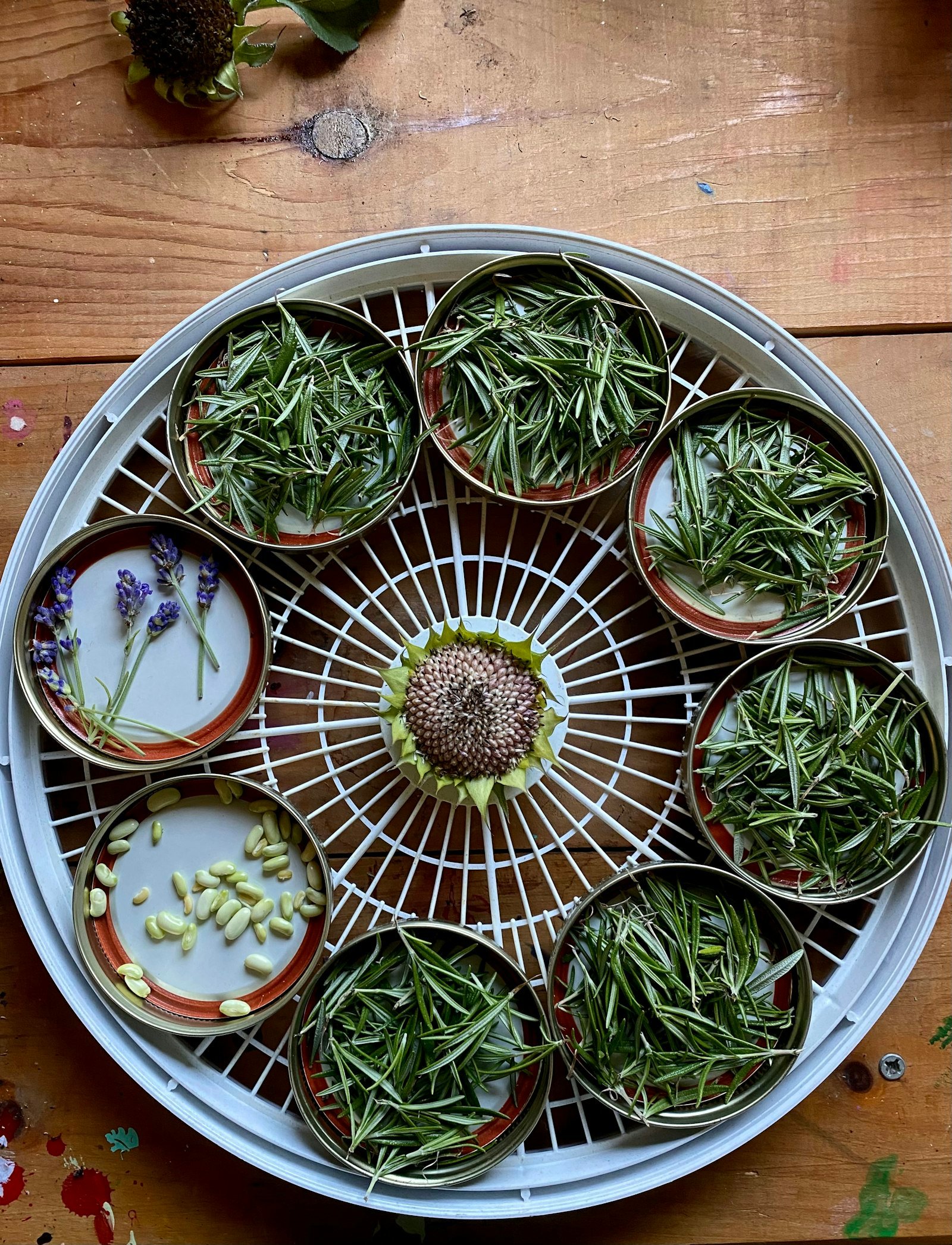
Harvest more than you can use in the summer and preserve the extra by drying bunches in a shaded, airy place, freezing chopped herbs in ice cube trays with a little water or oil, or making herbal teas from fresh mint.
Common Problems and Easy Fixes
- Yellow leaves: usually overwatering or poor drainage. Let the soil dry, and check that the holes are not blocked.
- Leggy, pale growth: not enough light. Move to a brighter place or use a grow light.
- Wilting despite moist soil: roots may be rotting. Repot into fresh, drier soil and trim damaged roots.
- Aphids or small insects: rinse leaves with water, wipe with a damp cloth, or spray with diluted mild soapy water.
- Bolting: caused by heat or stress. Provide shade, harvest regularly, and sow successive crops.
Design Ideas for Small Spaces
- Hang pots from a balcony rail or wall bracket to save floor space.
- Use a tiered shelf or a ladder-style stand to hold several pots in a small footprint.
- Attach a pallet or a wooden board with small pots as a vertical herb wall.
- Label each pot with a wooden stick or painted stone so you can quickly identify them.
- Place a tray of pebbles under pots to catch water and add a little humidity.
Frequently Asked Questions
Can I grow herbs indoors all year?
Yes, if they get enough light. A bright windowsill or a small grow light works. Chives, parsley, mint, and thyme tolerate indoor conditions well.
How long before I can harvest?
Fast herbs such as basil and coriander can be picked within four to six weeks from seed. Slower herbs, like rosemary and thyme, need several months, though plants from a nursery are ready much sooner.
Why does my basil keep dying?
Basil dislikes cold, wet roots, and low light. Give it warmth, sun, and well-drained soil, and avoid overwatering.
Are herbs safe around pets?
Most culinary herbs are fine in small amounts, but some plants can be harmful to cats and dogs. Check a reliable pet safety list before placing pots within reach.
The Takeaway
A herb garden grows from a few simple choices: enough light, pots with drainage, light soil, and measured watering. Start with three herbs you cook with most, give them a bright spot, and harvest often. In a few weeks you will be cooking with flavors you grew yourself.